



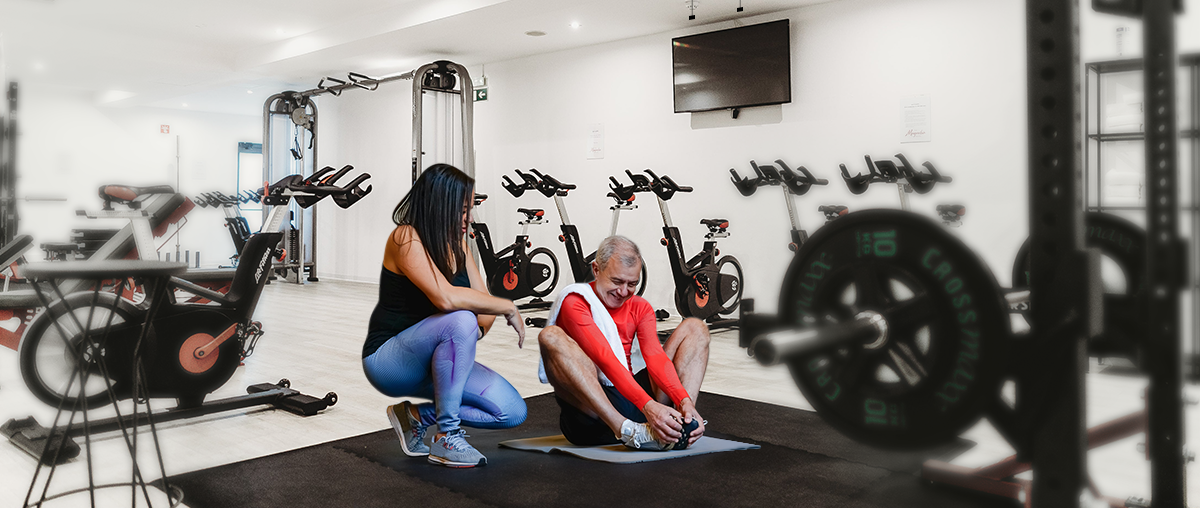

Even the elderly need to exercise but under supervision
Can an elderly person enroll in a gym for the sake of keeping fit? Generally, the answer would be a “no”. But this will not apply to everybody and not in all situations.
If an elderly person with no history of physical exercising, takes to vigorous resistance training all of a sudden, the results can be disastrous. And injuries resulting from such acts are becoming very common as most rush to gyms seldom seeking prior medical advice.
Please note, physical exercise can never be recommended across the board, especially because most elderly people seldom have prior history of exercising.
A. What should the elderly do to keep themselves fit
It does not mean that gym is totally forbidden just because one is elderly. Of course, they can. But it should be done with caution and keeping in mind that gym for them is more about maintaining fitness than building muscle mass. So, some of the instruments may not at all be suitable for them while some may be tried out. For example, cycling will be more suitable for the elderly than treadmills, as the distribution of the body weight is better due to the support that the seat provides.
However, swimming, and walking ought to be preferred to ‘gyming’ for the elderly. Tai-Chi and Yoga have also been seen to be greatly helpful. The only riders here will be not to exercise two or three hours after having a meal and instead of jumping into exercises, one should first warm up for about 10 minutes before exercising and then cool down for another 10 minutes whatever be the prescribed regimen.
B. Sedate life can make a young person physiologically elderly
Who is an elderly person? In general, anyone above the age of 55 is an elderly person. But then again, like they say, age is just a number, for there are people who may be above 55, but may be much younger physiologically and vice versa. Chronological age and physiological age are showing a dangerous trend of diverging and this is especially true for many young people who are forced into unhealthy work environments like being cooped into workstations for prolonged periods.
So, it is of utmost importance that many factors are properly analysed by a competent medical professional before any remedy is pulled out from the hat. For example, if someone’s weight is about 10 or 15 kgs above the Body Mass Index (BMI) strenuous resistance training in a gym should be avoided. You can calculate your body mass index yourself. If, for example, your height is 1.7 meters (not in inches or feet) and your weight is 70 kilograms, your BMI would be weight/height2. In other words, multiply your height by your height (1.70 x 1.70 = 2.89) and then divide your weight in kilograms by height squared to obtain your BMI. In our case it is: 70 ÷ 2.89 = 24.22
However, such rules of thumb should be generally avoided and only after proper physical examination, exercise regimens should be worked out. As for the young people working in such “physically challenged” environments, it is imperative that after every 2-3 hours of working they stretch out to break both the physical and mental monotony.
Younger people who are overweight should start dieting and working out to gradually tone up their muscles before going into gyms, but the elderly do not have such luxuries of time and should be more focused on the actual physical activities that they partake in. In all cases, it is recommended that doctors are consulted before any such rigorous physical activity is embarked upon.
C. Consult a doctor before enrolling in a gym
One must remember that most comorbidities suffered by the elderly are managed with a three-pronged approach involving Drugs, Diet, and Physical Activity. If, under proper medical supervision individually crafted regimens are maintained, most risks can be minimized, including those related to bones.
Often, reducing the body weight, drastically, for an elderly person becomes a challenge that opens a Pandora’s Box of risks. In such cases, the focus should be on managing the weight, so that the muscles remain toned enough to carry even the excess weight. But here again, the priority should be to address and bring the comorbidities under control before embarking on a strenuous regimen, be that resistance training using lower or heavier weights.
D. Mind your pains and diabetes
Control the diabetes and the joint pains first, before going in for resistance training. The point is, in all cases, the medical issues afflicting individuals must be identified, and addressed before exercise regimens are charted, and therefore, the involvement of a medical practitioner in the entire process is a must.
For medical consultations, click here to access Peerless Hospital's online doctor booking facility
You may also like
Preventing and Treating Bed Sores
Dec 12, 2024Bed sores, also known as pressure ulcers, occur when continuous pressure is exerted ....
Read More
Not All Chest Pains Need Cardiology Treatment
Jun 23, 2023All chest pains are not heart attacks and all heart attacks may not be associated with chest pain.
Read More
Dengue – Symptoms & Preventive Measures
Nov 15, 2021Dengue is a mosquito-borne viral disease which poses high medical burden in many regions worldwide.
Read More
The pregnancy period is normally a joyous, fulfilling and satisfying experience for most mothers...
Read More