




Diabetes Management - Diet, Exercise, Testing & Daily Care
Diabetes has taken the form of an epidemic, with about 8 to 10 per cent of the population in our country suffering from Diabetes. Above the age of 45, this is even more alarming, with 15 to 20 per cent suffering from this dreaded disease. This is why diabetes management is one of the major areas of focus in the Peerless Hospital.
The gravity of the situation is underscored by the fact that about 80 per cent of the people suffering from it do not have any symptoms that point to diabetes. However, in about the remaining 20 per cent of the cases, where patients suffer from very high levels of blood sugar, diabetes symptoms like thirst, excessive urination, loss of weight, irritability, tiredness, etc may manifest themselves, pointing at type 2 diabetes.
Get tested for diabetes regularly
In an overwhelming number of cases, there are no diabetes symptoms, per se, as we have pointed out, and even the problems relating to the drying of open wounds may not be present. Therefore, the only way to detect diabetes is through blood tests, which are inexpensive, reliable, and easily accessible. And it is recommended that after 40, a blood test should be done on a yearly basis – both fasting (a test conducted in the morning on an empty stomach after 8-12 hours without intake of food) and post-prandial (2 hours after the start of food intake). Another test is the HBA1C which tells us the three-month average of the sugar levels in the blood (this test calculates the sugar coating in the red blood cells in our body, and as the red cells have a lifespan of three months, by measuring the sugar coating on them, we can arrive at the average sugar level).
What is normal blood sugar level
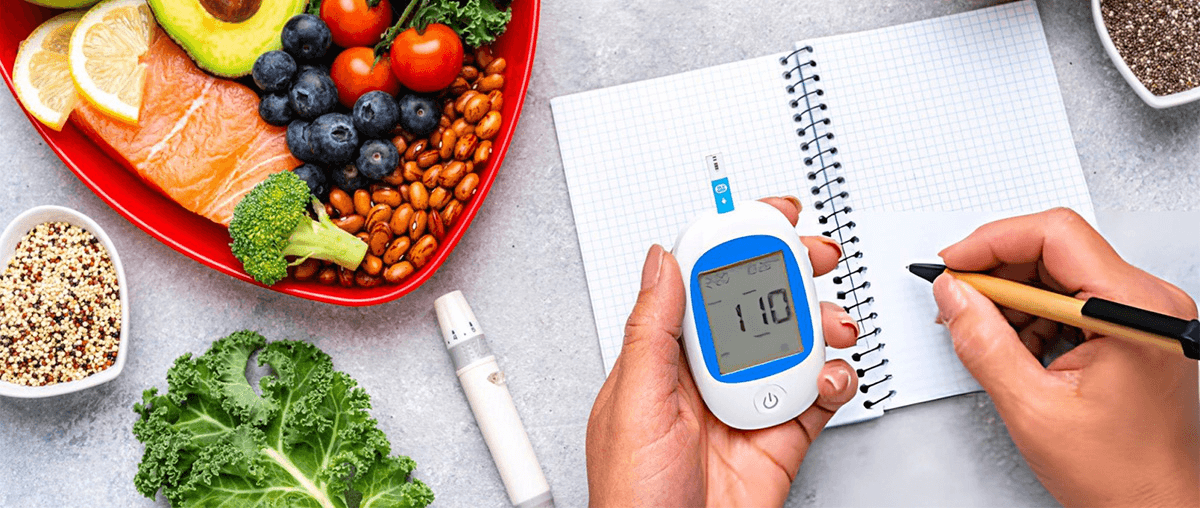
Fasting Sugar level less than 110 is considered normal. There is some controversy about this, as the American Diabetes Association has designated 100 to be normal, while the WHO has prescribed 110. In India, we adhere to the WHO criterion. This is regardless of the age of the patient.
PP sugar level, again, regardless of age, is considered normal when it is less than 140. Fasting sugar 126 and above is diabetes, whereas PP sugar of 200 and above is considered diabetes. HBA1C less than 5.7 is normal, whereas more than 6.5 is diabetes. All patients with readings that fall in between these thresholds are considered pre-diabetic.
Meaning of pre-diabetic
Pre-diabetic means that the patient has a 30 per cent chance of getting diabetes, while there will be equal chances of remaining in the same state or reverting to normal. Pre-diabetics, it goes without saying, must strive hard not to get diabetes. This, too, falls within the purview of diabetes management.
For pre-diabetic patients, we normally do not prescribe any medication. We usually start addressing the issue with diet and exercise.
What should you eat
For pre-diabetic patients and those without diabetes, the diet advice is the same as one who is a diabetic. Diabetes diet is a misnomer; what we have and prescribe is a healthy diet. Avoiding sugar and sweets altogether in case of diabetics, and limited to as little as possible for non-diabetics; less intake of oils, regardless of the type (olive oil is less bad, but may not be practical in terms of it being very expensive, so a mixture of sunflower oil, and mustard oil) should define your platter boundaries. Point to be noted here is that all oils are bad – whether diabetic or not – and should be avoided as much as possible.
The third food group to look out for is carbohydrates, which we tend to consume a lot. Ideally, carbohydrates like rice, breads, noodles, idlis, dosas, etc should constitute about 55 to 60 per cent of our food. The problem starts when we consume more carbohydrates and less of accompaniments like dal, vegetables, proteins, and the like. Ideally, it should be the other way round, with us having less of carbohydrates and more of other food items. As opposed to the earlier held notion that underground vegetables are bad, we suggest that all vegetables can be had, in moderation. Fish is a definite must-have for non-vegetarians, and egg, with yolk, can be had three times a week. Chicken twice a week is also fine. However, red meat should be avoided more than once a month.
All fruits have sugar in it, but the good things in them outweigh the negative and should be had, irrespective of whether one is diabetic or not. Two fruits a day is recommended. However, for diabetics, bananas and mangoes should be taken in moderation as the sugar content in them is very high.
The timing of food intake, again, irrespective of whether one is diabetic or not, is also very important. The routine should be breakfast at 9, lunch at 1-130, snacks at 5 - 530 and dinner between 9 and 10.
How much should you exercise
The next topic that must be broached is exercise. In our haste we never find time to exercise, so we must utilise whatever time we have to exercise. An example would be climbing down the stairs. While waiting for the lift, instead of being immobile, keep shifting steps, keep walking around whenever possible. For those with desk jobs, being sedentary increases not only the possibility of diabetes but also leads to several back problems. For them, the suggestion is that after every hour at the desk, take a short walk for about 2 to 3 minutes. Another fallacy is that one should walk only in the morning – one can walk anytime during the day, ideally, which should be about 30 to 45 minutes every day. This can also be broken down into, for example, three 15-minute blocks.
There are some muscle exercises that are important too, as with age, we tend to lose muscle mass. As the bulk of the sugar from food are taken in by the muscles, loss of muscle mass will lead to higher sugar levels. That is why isometric exercises are recommended.
However, the term “isometric” should not scare one, as it does not necessarily mean that one has to go to a gym. Standing up with the hands folded is good enough for strengthening the lower body muscles, to put it in very simple terms. Standing on the toes and shifting the pressure alternatively between the toes and the heels have similar effect on the calf muscles. Holding a bottle of water up and down has a similar effect for the upper body. The idea is to make do with whatever you may have around you, thereby avoiding both the challenges of time and money.
For elderly people balance exercise is also highly recommended. They should stand facing the wall, put their hands on it for support and try to stand on one foot, by lifting the other slightly. With time, effort should be made to reduce the support from the wall, so that one may stand on his or her own, lifting the legs alternatively. Doing this regularly improves the gait, reducing the chances of falling appreciably.
There is no specific guideline regarding the efficacy of breathing exercises in controlling diabetes. Pranayama can be done as it is generally beneficial. Some yoga asanas can also be practised, but it is always advisable that they are done under trained supervision and in addition to the regimen that is medically prescribed.
What should be your weight
Being overweight does not mean one is healthy; quite the contrary, it denotes unhealthiness. If one is unable to stand up with the hands folded, or keep the hands raised for a sufficiently long time without pain or discomfort, one must understand that the body is signalling signs of decay. Body Mass Index also points out where a person rests in terms of the obesity spectrum. The normal BMI is between 18 and 25 (18 to 23 for Asians). There are other markers as well, especially for muscular people, like waist to height ratio. Arnold Schwarzenegger may seem overweight in terms of BMI, but the picture will change completely if his waist to height ratio is considered. As Indians we must consider this waist to height ratio, as we are prone to having fat accumulate around our waists which is the worst kind of fat to have.
Can I drink alcohol
Another thing that must be highlighted here is that one peg of whiskey is equivalent to almost seven and a half teaspoons of sugar, or roughly about one icecream as far as calories are concerned. Compared, the ice-cream is better as it has many other ingredients, whereas the alcohol has nothing except empty calories, which makes the ice-cream the lesser of the two evils. While the western recommended limit is two pegs per day, some doctors in India believe that it is best avoided for Indians who should try to restrict themselves to two pegs in a week. Alcohol should be taken in moderation.
Diabetes can be a silent killer unless managed properly. For early detection of diabetes, one should be tested once a year, and even if one may not have it, one should be careful about what one eats and indulge in moderate exercise.
Popular Searches
Peerless One | Peerless Hospital Kolkata | Hospital in India | Big Hospital in Kolkata | Multispecialty Care | Best Multispecialty Hospital | Best Hospital in Kolkata
You may also like

There is a quiet revolution transforming the healthcare infrastructure scene in the North-Eastern states of the country, with Guwahati as its epicentre and Peerless Hospitals playing a key role in the metamorphosis.
Read More

The incidence of cases requiring neurosurgical intervention is on the rise globally, and India is no exception.
Read More
Just having cancer is not enough to threaten mortality.
Read More
Paediatric surgery is different from general surgery primarily because paediatric surgeons have to deal with very small patients.
Read More
Walk down any street in Kolkata, and you are, in a sense, walking through history.
Read More