




Breast Cancer Screening for Normal and High Risk Individual
Written by PeerlessOne on 29-10-2026
Last Update on 29-10-2026
Table of Content
- Introduction
- Quick Answers
- What Is Breast Cancer Screening?
- Are You Average or High Risk?
4.1 Average Risk
4.2 High Risk
4.3 The Grey Zone
4.4 How Risk Is Calculated
4.5 Fast Checklist of Risk Factors for Breast Cancer - Breast Cancer Screening Guidelines for Average-Risk Women
5.1 Comparison Table
5.2 Why Breast Cancer Screening Guidelines Differ?
5.3 Breast Screening in Your 20s and 30s
5.4 When to Stop Screening - Breast Cancer Screening for High-Risk Women
6.1 Annual MRI Plus Mammogram
6.2 Genetic Testing and Counselling
6.3 Earlier-Start Scenarios
6.4 Why MRI Is Not Used for Average-Risk Women
6.5 Risk-Reducing Options - Breast Cancer Screening Mammogram: What to Expect
7.1 Before the Appointment
7.2 During the Examination
7.3 2D and 3D Mammography
7.4 Understanding BI-RADS Results
7.5 What About Dense Breasts? - Other Breast Screening Tests
- Benefits and Risks of Screening
- After an Abnormal Result
- Special Groups
- Cost, Access, and Where to Get Screened
- Breast Symptoms: Don't Wait for Your Next Screening
- Key Takeaways: Breast Cancer Screening
14.1 Personalised Screening Support - FAQs
Introduction
Breast cancer screening is a vital procedure that plays an important role in diagnosing breast cancer even in cases where no symptoms are present. It is important to know when the right time is to conduct the screening, what types of tests could be conducted, and how often they need to be done in order to assist a woman in making sound decisions for her health. However, there is no single timetable for all people. Age, genetics, family history and prior treatment may play a role here.
Quick Answers
Average-Risk Group: There are a number of guidelines that recommend screening to start at 40 years of age on a yearly basis.
High-Risk Group: Annual breast MRI and mammogram may be recommended at and after 30 years of age, annually or biennially according to the risk factor.
Tailored Screening Recommendation: Your doctor will help in deciding the appropriate time and frequency for screening.
What Is Breast Cancer Screening?
Breast cancer screening is a process where testing is carried out among asymptomatic patients in order to find any traces of breast cancer. The primary screening tool used for breast cancer screening is mammography, whereby low-dose X-rays are used to form images of breast tissues. Other forms of imaging tests may be recommended based on risk factors.
Screening differs from diagnosis. The screening test is conducted for an asymptomatic patient while diagnostic imaging examines a problem like a lump, nipple discharge or even a finding from a screening process.
Screening for breast cancer helps to catch the cancer early when there is a better chance of treatment success. But the survival rate differs according to the stage of cancer at the time of diagnosis, the kind of cancer, and other personal factors. Early detection is essential, but screening cannot ensure a specific result.
It is a representation of how important early detection is, though success rates differ from one person to another depending on the disease biology and the treatment received.
Breast cancer screening does not stop a woman from getting cancer; neither does it detect all cases of cancer. However, adherence to the screening process reduces chances of dying from the cancer as early diagnosis of cancer it makes it more curable with better outcomes
Are You Average or High Risk?

Knowing your risk category is important for establishing how frequently you should be screened.
Average Risk
Someone could be defined as average risk if there is no personal history of breast cancer, no significant family history, no known genetic mutation which causes elevated risk, no history of suffering from any other cancer like uterine, ovarian, cervical cancer and no history of radiation to the chest as a young adult. The term average risk does not indicate the absence of risk.
High Risk
Some factors that are linked to significantly higher risk are:
- Presence of a damaging mutation in the BRCA1 or BRCA2 gene.
- A first-degree relative, such as a mother, brother or daughter who has a BRCA1 or BRCA2 gene mutation but the person himself/herself has never undergone testing.
- Has been diagnosed and treated previously with uterine, ovarian or cervical cancer.
- Previous radiation treatment of the chest area before the age of 30.
- Some hereditary syndromes, like Li-Fraumeni, Cowden and Bannayan-Riley-Ruvalcaba syndromes.
For people having these factors, additional screening methods may be needed, which should be coordinated with specialists. ACS states that an annual MRI of the breasts along with mammograms is advised for women at high risk of breast cancer. (Source)
The Grey Zone
Individuals with lifetime risk ranging from 15% to 20%, LCIS, ADH, ALH, or dense breasts are considered to have intermediate-level risk.
According to ACS, there is inadequate evidence to support or discourage annual MRI screening for these individuals. This does not imply that MRI is not suitable, but the decision should be based on the total risk profile of the patient.
How Risk Is Calculated
Tools for breast cancer risk assessment like Gail, BRCAPRO, and Tyrer-Cuzick have different elements that determine an individual’s probability of developing breast cancer such as age, family history, reproductive history, and genetic makeup. Given the different inputs used, the estimates may vary. The health practitioner should then interpret the results.
Fast Checklist of Risk Factors for Breast Cancer
Mark all that apply to you. This checklist is meant for education purposes only. It will not diagnose your level of risk nor can it substitute for a professional evaluation.
- I have BRCA1/2 gene mutations.
- I have a close relative with BRCA gene mutations, but have not had testing myself.
- I had chest radiation treatment at age below 30.
- I have strong family history of breast or ovarian cancers.
- I was diagnosed with LCIS, ADH, ALH.
- I have had breast cancer, ovarian cancer, uterine cancer , cervical cancer or other high-risk inherited disorders.
If You Have Chosen Any Risk Factor
Talk about your choices with a healthcare provider. You will be required to have a risk assessment done, genetic counseling, or personalised screening programme based on your history and family background.
If You Have Not Chosen Anything from Above
This does not necessarily imply that you are at the average risk level. There can be many more risk factors than are covered by this checklist. Talk to a healthcare provider to work out the right screening programme.
Breast Cancer Screening Guidelines for Average-Risk Women
The following comparison highlights some key recommendations. These recommendations may apply to various populations and health-care systems, and as such, they cannot be seen as interchangeable.
Comparison Table
| Organisation | Year | Start Age | Interval | Stop Age | Clinical Breast Exam |
| USPSTF | 2024 | 40 | Every 2 years | 74; inadequate evidence beyond age 75 | Not a substitute for mammography |
| ACS | 2015 | Option at 40-44; annual screening from 45 | Annual at 45-54; every 2 years or annually from 55 | When in good health and anticipated to live for at least another ten years | Not suggested for use in average-risk females |
| NCCN | 2024 | 40 | Annually | Individualise depending on your health condition | Yearly clinical visit from 40 |
| ACOG | 2024 | 40 | 1-2 Years | Continue to at least 75; individualise thereafter | Clinical examination does not substitute for mammography |
| ACP | 2026 | 40–49: Benefits and harms to be discussed before taking a decision | If screening is performed for those aged 40-49: every two years; for those aged 50-74: every two years | Over the age of 75 or with limited life expectancy, consider whether it’s worth stopping | Clinical breast testing is not an alternative to mammogram screening |
| NHS England | 2026 | Invitations begin at 50-53 | Every 3 years | Routine invitation up to 70; screening can be requested by appointment starting at 71 every 3 years | Not the standard diagnostic procedure |
Additional ACP Guidance: For average-risk women with dense breasts (BI-RADS C or D), ACP recommends the use of digital breast tomosynthesis where appropriate and does not recommend supplemental MRI or ultrasound screening. (Source)
Why Breast Cancer Screening Guidelines Differ?
Organizations consider the advantages of early diagnosis in contrast with the risk of getting a false positive, unnecessary tests and over-diagnosis. There are those who prefer an annual mammogram, while some recommend screening once every two years.
Breast Screening in Your 20s and 30s
Regular mammography is not usually advised for people of average risk in their 20s and 30s. Ultrasonography of breast is quite useful tool for young females as the breast tissue is dense and mammography is not able to detect all suspicious lesions. It should also be kept in mind that USG is an operator dependent test and should always be done by a radiologist who has received specialized training for breast scans. Breast awareness and proper clinical examination remain vital. The 2024 NCCN guidelines suggest regular clinical visits for people of high risk between the ages of 25 and 39 years old. Those with symptoms or risk factors may require early assessment.
When to Stop Screening
According to ACS, one should continue screening while they are healthy and have a life expectancy of at least 10 years ahead. Other groups have different age cutoffs or recommend individual considerations beyond 74–75 years of age. Consult your physician regarding the pros and cons of such screening.
Breast Cancer Screening for High-Risk Women
People at high risk may require early and more often repeated imaging. ACR’s 2023 recommendations for higher-than-average-risk women provide support for risk-based screening, including MRI.
Annual MRI Plus Mammogram
As per the recommendation from ACS, yearly MRI, together with mammograms, is required for high-risk women, usually from the age of 30 onwards. The eligibility criteria for such women include the lifetime risk of developing cancer of 20–25% or higher, presence of BRCA mutation, certain syndromes or chest radiation before age of 30.
Genetic Testing and Counselling
BRCA testing may be done in individuals having a strong family history of breast or ovarian cancer, presence of inherited mutations in the family or other hereditary aspects related to cancer. Genetic counselling will assist in understanding the pros and cons of genetic testing.
Earlier-Start Scenarios
Individuals receiving chest radiation during their early years or with a strong family history may require early screening. It depends on the age at the time of treatment, age of relatives with cancer and estimated personal risk.
Why MRI Is Not Used for Average-Risk Women
MRI will be able to pick up on other abnormalities, but it may have more false positives. MRI is generally more expensive and less available than mammography. Therefore, screening MRI is usually only performed on individuals who have risk factors requiring further imaging.
Risk-Reducing Options
High-risk people can consult a specialist regarding either risk-reduction drugs or preventative surgeries. Both these methods need to be assessed in terms of their pros, cons, and individual preferences.
Breast Cancer Screening Mammogram: What to Expect
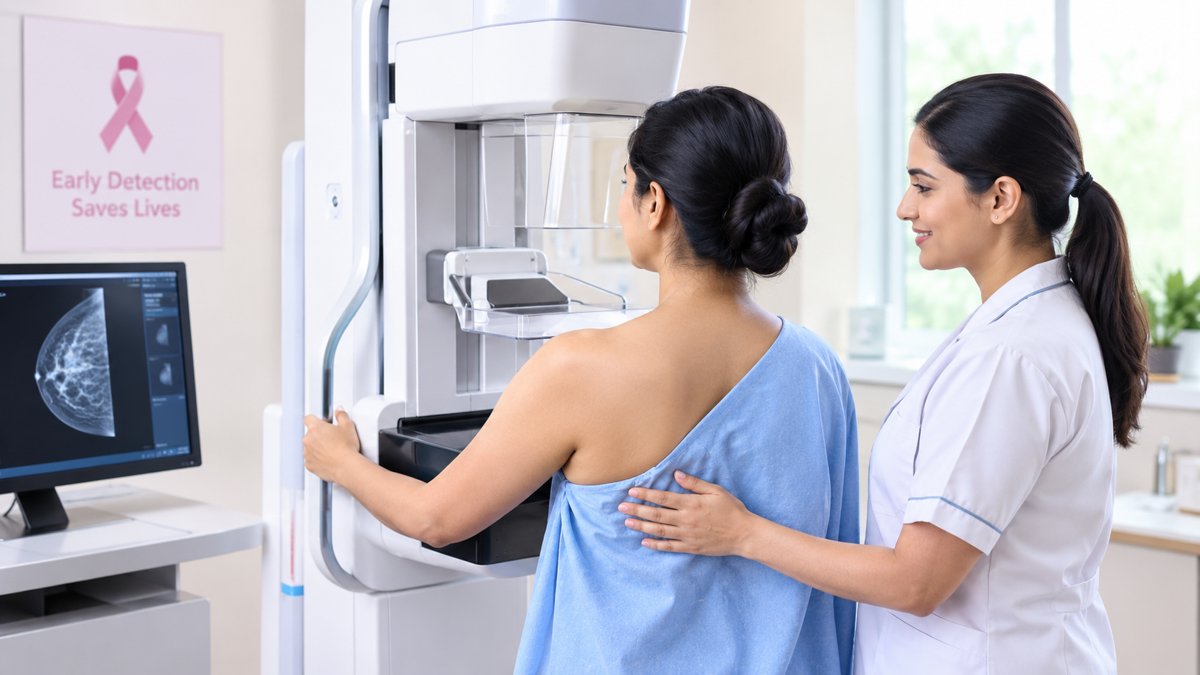
The breast cancer screening mammography technique uses low-dose X-rays to generate an image of the breasts.
Before the Appointment
- Inform the imaging department regarding pregnancy, breast implants, and prior breast surgeries.
- Provide mammogram images and reports if you have them.
- Do not apply any deodorants, powders, or lotions to your breasts and armpits on the day of the test.
During the Examination
Each breast is positioned between the plates, and compression is applied to take the images. There may be some discomfort, but it is temporary. The test usually takes about 20 minutes.
2D and 3D Mammography
Conventional mammography gives a two-dimensional image while 3D mammography acquires images in several views to give a clearer picture. There are variations in accessibility and appropriateness.
Understanding BI-RADS Results
The Breast Imaging Reporting and Data System (BI-RADS) is used for mammography results interpretation.
| Category | Meaning |
| 0 | Other imaging studies or previous films required |
| 1 | Negative |
| 2 | Benign lesion |
| 3 | Most likely benign, but short-interval follow-up may be indicated |
| 4 | Suspicious finding; biopsy may be suggested |
| 5 | Strong indication of cancer |
| 6 | Confirmed to be cancer by biopsy |
Just because an abnormal screening is detected does not mean that there will be cancer. Another scan or biopsy may be done.
What About Dense Breasts?
Abnormalities cannot be easily detected in dense breast tissue through a mammogram. The use of ultrasound or MRI could be considered for some patients, but additional imaging tests are not recommended for all patients who have dense breasts. There is insufficient evidence on whether there are any advantages or harms associated with additional screening using ultrasound or MRI.
Other Breast Screening Tests
- Breast MRI: Complementary to mammography in some selected high-risk cases.
- Breast Ultrasonography: Useful in the evaluation of masses or clarification of some selected imaging results but cannot be used as an alternative to mammography.
- Clinical Breast Exam: When needed, a healthcare provider evaluates the breasts.
- Breast Self-Examination: Being aware of breast changes and seeking evaluation, but self-examination should not be considered an alternative to screening.
Benefits and Risks of Screening
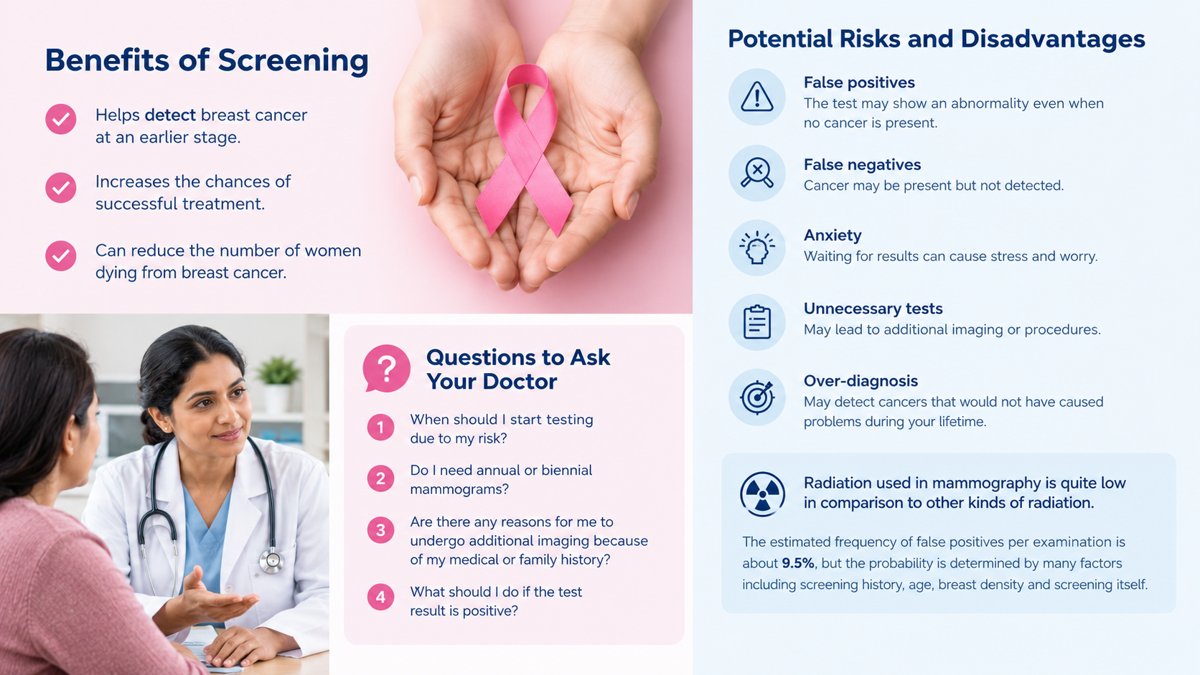
It will help in detecting cancer at an earlier stage and decrease the number of women dying from breast cancer. Yet, there can be some disadvantages of this practice as well - false positives, false negatives, anxiety, unnecessary tests and over-diagnosis.
Radiation used in mammography is quite low in comparison to other kinds of radiation. The estimated frequency of false positives per examination is about 9.5%, but the probability is determined by many factors including screening history, age, breast density and screening itself.
Questions to Ask Your Doctor:
When should I start testing due to my risk?
Do I need annual or biennial mammograms?
Are there any reasons for me to undergo additional imaging because of my medical or family history?
What should I do if the test result is positive?
After an Abnormal Result
Callback is quite normal and doesn’t imply that you have cancer. In order to make the right diagnosis, you will need to go through additional tests such as MRI, ultrasound or biopsy if needed.
Special Groups
Males having BRCA mutation or with a positive family history might have individual risk assessment and in certain cases, require specialised screening. The information on how to screen individuals who are transgender and non-binary is provided by NHS and Susan G. Komen. (Source)
Individuals with prior history of breast cancer usually need an individualised follow-up plan suited to their specific needs according to the kind of treatment and recurrence risk that they face, instead of following the regular risk screening schedule.
Cost, Access, and Where to Get Screened
Costs associated with breast cancer screening vary according to the type of screening recommended and the need for further imaging or consultation. Make sure you know what the current costs are and whether the price quote includes the report and specialist consultation.
Peerless Hospital, the healthcare arm of Peerless, offers a One Stop Breast Clinic package that includes a breast mammogram and ultrasound on both sides and consultation from either a breast surgeon or an oncologist. Other services offered by the hospital include digital mammography and ultrasound of breasts.
Please visit the Peerless Hospital Oncology Department or its Radiology Department for more information on services and appointments.
Breast Symptoms: Don't Wait for Your Next Screening
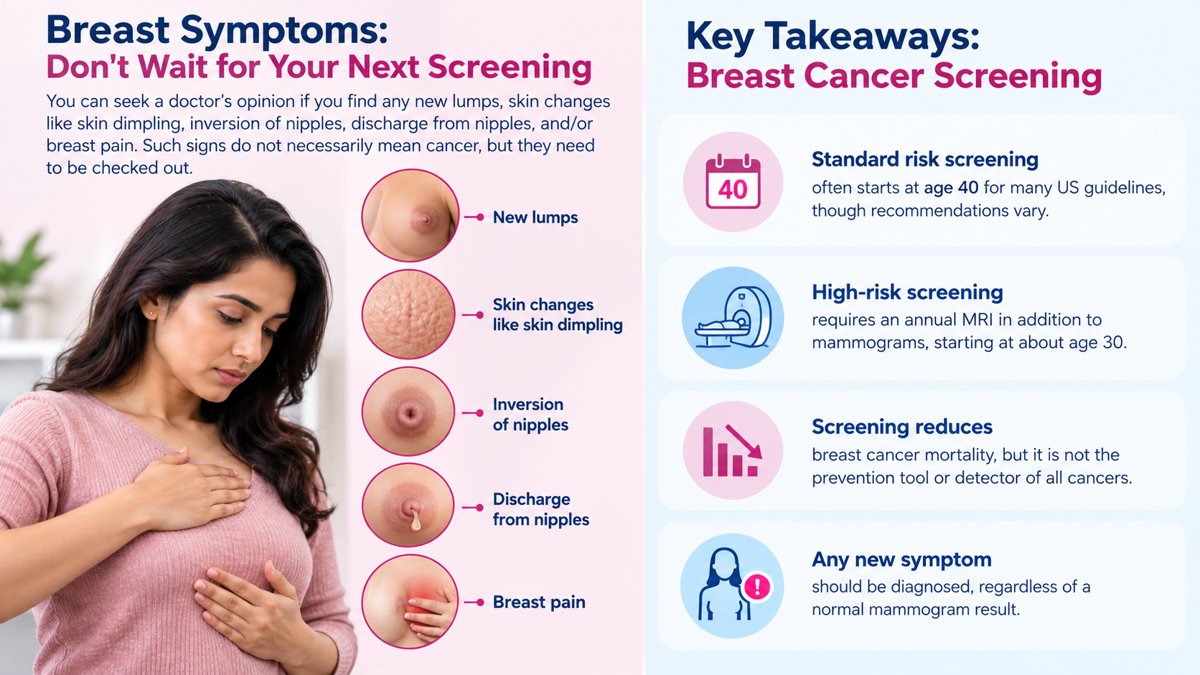
You can seek a doctor's opinion if you find any new lumps in your breast or underarms, skin changes like skin dimpling, inversion of nipples, discharge from nipples, and/or breast pain. Such signs do not necessarily mean cancer, but they need to be checked out.
Key Takeaways: Breast Cancer Screening
- Standard risk screening often starts at age 40 for many US guidelines, though recommendations vary.
- At high risk, one will require an annual MRI in addition to mammograms, starting at about age 30.
- Screening reduces breast cancer mortality, but it is not the prevention tool or detector of all cancers.
- You have to diagnose any new symptom, regardless of a normal mammogram result.
Personalised Screening Support
Consult a health care practitioner who will advise you on the type of screening tests and their frequency that you require depending on your age, history and risk factors.
Talk to your doctor about your own history and that of your family and the time frame that should be followed for testing.
FAQs
At what age should I start breast cancer screening?
Several American institutions advise starting screening mammograms at the age of 40, while other guidelines propose different options. High-risk patients will require earlier screening.
How often should I get a mammogram?
Mammograms could be required annually or every two years depending on the guideline and individual risk factors. Follow the mammography guidelines you have been discussing with your doctor.
Is a mammogram painful?
This could result in temporary pain. Inform the radiologist if you feel pain. The pain usually subsides shortly after the procedure is done.
Do I still need a mammogram if I have no family history?
Yes, if you meet the relevant age and risk factors. Many women having breast cancer have no family history.
Can I skip screening if I do monthly self-exams?
No. Breast self-exams do not replace screening imaging. Breast awareness is helpful for detecting any changes but screening and diagnosis serve entirely different purposes.
What is a 3D mammogram?
It is a mammogram that involves taking images of the breast tissue from several angles in order to obtain a more detailed picture. In some cases, this could lead to less callbacks and more cancers being diagnosed.
Does a mammogram miss cancer in dense breasts?
Yes. Dense breasts could mask abnormalities, therefore, consider discussing your overall risk and additional testing.
When should I stop getting mammograms?
It all depends on an individual’s age, state of health, life expectancy, and following of guidelines. Consult your physician for further discussion of the benefits and disadvantages of testing.
You may also like

Symptoms After An Injury may range from simple distress to a possible emergency.
Read More

Hairline fracture is the term used to describe a minor breakage of the bones due to repetitive strain.
Read More
Which Doctor to Consult for Headaches?
Oct 7, 2026The headache is one of the most frequently reported medical conditions by many individuals looking for professional help
Read More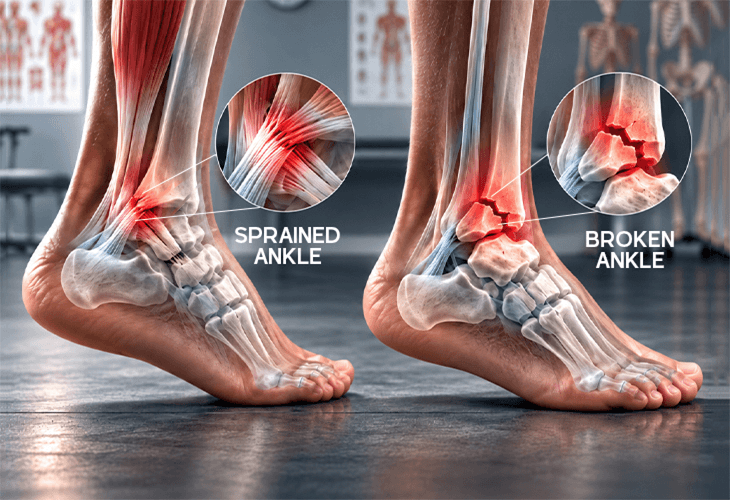
The exact statistics of ankle injury are difficult to get, but it is estimated that of all the trauma cases, about 10 per cent in general hospitals are related to the ankle.
Read More
Medical emergencies do not allow much time for making decisions; hence, the need to know the right hospital even before an emergency arises.
Read More