



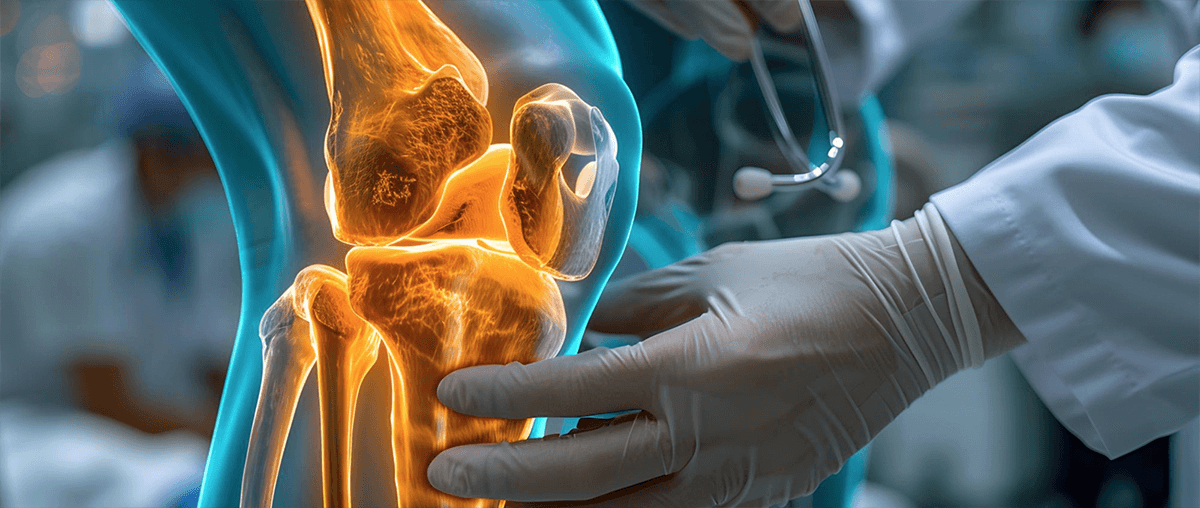

Most Common Orthopaedic Injuries and How They Happen
An orthopaedic injury is all about a trauma or condition which is affecting the musculoskeletal system which includes bones, joints, ligaments, cartilage and others. These injuries occur due to high-impact sports or bones related disorders. Understanding the common types and their mechanisms is crucial for prevention and effective treatment. The most prevalent types of orthopaedic injuries include fractures to strains, cartilage damage and others. In this blog, we have encompassed the common orthopaedic issues that are likely to affect the mobility and overall well-being of the individuals.
Most of the time, the injuries cannot be predicted, but the extra precautions can prevent the ones stemming from sports and other daily activities. As per the experts, there is no specific age of such injuries and they can impact at any stage of life. However, the increasing number of road accidents is leaving a detrimental impact on individuals and resulting in severe orthopaedic issues. The flawed food habits and sedentary lifestyle are the key factors which are increasing the likelihood of orthopaedic issues. In many cases, the overweight or underweight aspects affect the mobility of the individuals and lead towards the prominent deformities. Even the stress and anxiety issues are also responsible for intensifying the orthopaedic problems.
FAQs -
What exactly do we mean by orthopaedic injury?
Orthopaedic injury is an injury to the musculoskeletal system. That is an injury to bones, ligaments, muscles, tendons, and joints.
Which types of bone or joint injuries are most common today?
There is a varied distribution of the injuries. Going by age groups, paediatric patients normally suffer from either growth plate injuries or bone fractures. They heal very well as they have a better union or joining capacity. Growth plate injuries are slightly more worrisome because they may cause growth disturbances, leading to deformities later on.
The second is the young age group from teenagers to about 45 or 50. Their injuries are mostly, as we experience in the Peerles Hospital, caused by active sports or road traffic accidents. Road traffic accidents normally are high-velocity incidents that involve a lot of fractures, soft tissue injuries and may involve more than one bone or one system. Sometimes they are accompanied by head injuries, which are dealt with by neurosurgeons, or abdominal injuries or soft tissue injuries, where we lose a lot of muscles, tendons and tissues. This is termed as polytrauma.
In sports-related injuries, ligament injuries or sprains are more common than bone fractures. People come to us complaining of an ankle sprain, which is actually an injury of the ligament, mostly a partial or complete tear of the ligament. In high-energy sports like football, rugby, or other contact sports, knee injuries – mostly anterior cruciate or posterior ligament injuries are very common. Cartilage injuries, damage to the smooth tissue that cushions and protects joints, are also prevalent. Another common injury is to the Meniscus which is a moon-shaped cartilaginous type of structure.
What is the difference between a ligament and a cartilage?
A ligament is a tissue that joins two bones together. Cartilage is a resilient and smooth type of connective tissue, a kind of shock absorber over the bone, that prevents two bones from grinding against each other. Viscosupplementation treatments, among others like PRP (platelet-rich plasma), and stem-cell therapy (stem cell culture of cartilage cells to be precise) are used to address cartilage wear these days. In some cases, allograft transfers and mosaicplasty are also resorted to. Ligament reconstructions are done using tendons harvested from one’s own self or using artificial graft materials.
In cases where these medical procedures are found wanting, we proceed to knee replacement – either a partial or a total. This is done only when the degeneration has reached a stage beyond repair and the patient is not responding to any other means of conservative treatment.
Moving on to fractures, they are of two kinds and one of them is open (where the bone is exposed to the outside world). In such cases, an external fixator is used to stabilise the bone and followed by procedures to cover the bone with muscles or skin or soft tissue, even resorting to transplantation because unless the bone is covered, the healing process will not start. Open fractures are an emergency and should be addressed as early as possible, provided, of course, the patient is stable enough to undergo surgery. Whenever a patient comes in with a polytrauma or is injured from a major accident, the first thing that we do is called a DCO (damage control orthopaedics), where we try to contain the damage to the body – stabilising the patient with the minimum intervention at the least possible time. As soon as the patient stabilises, we try to put a soft tissue, or muscle, or plastic surgery to cover over the open part of the wound, which is followed by normal procedures like dressing etc. Once the soft tissue condition is considered healthy, we proceed towards a definitive internal fixation of the fracture, which is done by inserting either an intramedullary rod or a plate and nail that sits on the outer surface of the bone. Once a fracture is fixed, physiotherapy is started for the mobilisation of the joints, developing muscle power, improving the gait and helping return the patient to his normal active life as much as possible. This is where the PMR (physical medical rehabilitation) team takes over. Elderly people are mostly affected by fragility fractures. This is brought about by the reduction in the quality and quantity of bone cells due to ageing. Even trivial traumas cause fractures – most common being those of the wrist and the hip. The hip fracture has become one of the most common fractures around the world and leads to many complications due to the morbidity factors involved. Patients get bedridden, and doctors are scared to operate due to the age factor involved. However, it has been statistically established that timely operation reduces the risks substantially. Such patients are often under blood thinner regimes; still, we try to operate as early as possible, as it is often the only way to relieve them of the pain and suffering, but also of arresting several complications that are brought about by the restriction that such fractures force patients into. The elderly also suffer from a neck of the femur fracture, where an artificial ball is used as a replacement.
Are orthopaedic injuries increasing in recent years? If so, why?
Yes, definitely they are increasing. In the young, the incidence may be the same, in the middle age group, they have increased as road traffic accidents have increased. In the elderly, longevity in general has increased. Life expectancy has increased and in tandem hip fractures too have increased. Food habits, lack of exercise, and sedentary lifestyles are all responsible for leading us to this precipice.
How much of our daily pain or stiffness is linked to modern lifestyle habits – like long hours at desks or using phones?
A lot. Neck pain or the deformity of the neck or the pain of the cervical spine – a leading cause is the extended use of mobile phones. Tied to the desk for inordinately long hours is leading to back pain, stooped attitudes, neck pains, radiation of pain to the arms… lack of adequate physical activities is aggravating the problems.
Walking around in the house or the office is not “adequate physical activity” one must spend at least half an hour a day physically exercising, stretch. Even starting with a simple physiotherapy protocol is welcome, one that is aimed at improving the tonal quality of the muscles.
How does being overweight or unfit affect the chances of getting bone or joint injuries?
Our joints are basically bearings. An overloaded bearing will naturally have more wear and tear. A 40 kg person’s joints will have less pressure than a 100 kg person’s joints and naturally, the wear and tear will be different. This will lead to deformities in the joints, with the centre of gravity getting transferred outside the joint, which aggravates the problem. Obesity is the only controllable risk in osteoarthritis. Obesity means that there is more fat in the body compared to lean muscle mass, which leads to the wear and tear of the joints, making one more prone to bone, ligament or joint injuries.
Do poor posture and wrong sitting habits lead to long-term orthopaedic problems?
Yes. Most of us stoop forward, which robs the body of the lumber support. Normally, the screen should be at eye level, and the arm should be at keyboard level. Always use a chair with lumber support and an armrest. Laptops need special attention as it is not possible to maintain the position as can be followed in the case of a desktop computer, and the use of Bluetooth keyboards is recommended.
How does osteoporosis or vitamin D deficiency make bones more fragile?
Osteoporosis is basically the reduction in the density of the bones brought about by several deficiencies, most of which can be supplemented by medication or dietary management. Vitamin D deficiency can be addressed through medication of exposure to sunlight, an active lifestyle. The point to be noted here is that walking on a treadmill, which is a hard surface that exerts an equal and opposite pressure on the joints, leading to aggravated wear and tear, is not the solution – walking out in the open, on natural grass, is. Exposure to sunlight and intake of mushrooms, salmon fish, broccoli, Tofu, oranges, small fish, and in the absence thereof, oral supplements of Vitamin D is prescribed. Vitamin D deficiency is more prevalent among the urban than in the rural population.
Are certain professions – like IT, construction, or delivery jobs – more prone to specific orthopaedic problems?
Yes, they are. IT we have talked about. Construction involves workplace injuries, and delivery jobs are rife with road traffic injuries, often major ones. Even though we are a corporate hospital, many such cases come to us because they are covered by insurance.
Can stress and fatigue indirectly increase the risk of orthopaedic injuries?
Yes
How big a role do road traffic accidents play in orthopaedic injuries in India?
They are a major cause, especially if two wheelers are considered. Now that laws are much stricter about the use of helmets, the incidence of head injuries has reduced, but orthopaedic injuries have increased.
Do slips and falls at home contribute significantly to fracture cases?
Yes, primarily among the elderly.
What are some warning signs that people often ignore before an injury happens?
Most injuries are accident-related and cannot be predicted. But injuries to the spine, the back and sports-related injuries can be prevented to some extent. It is always advisable that a trained practitioner be consulted immediately on the occurrence of the injury instead of waiting for it to manifest itself.
Are there simple steps to protect our bones and joints in everyday life?
Regular exercise, good diet, a cap on smoking and alcohol. It has been statistically proven that smoking causes problems in bone union.
When should someone consult an orthopaedic doctor instead of trying home remedies?
In case of previous injuries, or when one notices that one can accomplish less physically than in the past, or in case of tiredness or pain brought about by physical exhaustion, or a problem in climbing downstairs, or joint pains caused by movement, one should consult a physician. Bone tenderness, which manifests in sheen pain, rib cage pain, and the like, also calls for a visit to the doctor. It is not necessary, definitely not in the younger age group, to visit an orthopaedic doctor without any red flags going up. Females after 45-50 and males after 55-60 should, however, visit one as a precautionary measure and have a routine neck and abdominal bone X-rays done to see the level of fragility in the bones.
What role does mental and physical balance play in keeping our musculoskeletal system healthy?
I refer most of my patients for psychological counselling for post traumatic stress, which is an important part of the treatment. Orthopaedic treatment is long-term, spanning over months at times, and often causes mental problems like depression in patients, which also need to be addressed.
What one simple change could most people make today to reduce their risk of orthopaedic surgery?
Exercise. Just enough to improve your muscle tone, your balance, to ensure that one does not fall, twist one’s muscles and things like that. Follow a more physically active life.
With the changing lifestyle, more and more elderly are falling prey to orthopaedic injuries that can be controlled, if not avoided, if we take care of our health from the early stages of life, with a specific focus on fitness. The orthopaedic department at the Peerless Hospital offers a complete spread of treatment for such injuries, which can be fatal or intensely debilitating if not taken proper and timely care of.
Popular Searches
Peerless One | Peerless Hospital Kolkata | Hospital in India | Big Hospital in Kolkata | Multispecialty Care | Best Multispecialty Hospital | Best Hospital in Kolkata
You may also like
Peerless Hospital - a multispeciality caregiver
Nov 11, 2025The Peerless Hospital is a multispecialty care giver.
Read More
Compassion at the Peerless Hospital in Kolkata is not an afterthought to be bandied about.
Read More
Globally, the age threshold of people suffering from heart diseases is coming down alarmingly.
Read More
Hospitalisation need not be a stressful exercise involving endless paperwork and a matter of mental anguish, trauma, and uncertainty about the outcome.
Read More
Emergency medicine in healthcare is an essential discipline. Although emergency medicine globally came into prominence in the 60s, in India, its transformative influence began to be felt in the 1990s.
Read More