



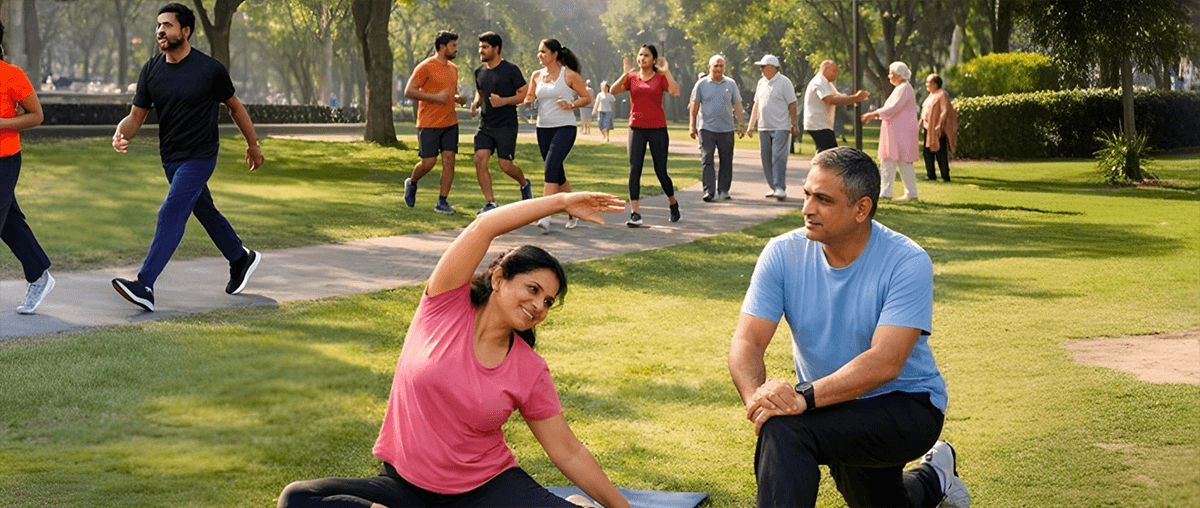

The Importance of Regular Physical Activity for Joint Health
A multitude of causes can trigger joint pains, of which some can be transient, whilst others debilitatingly chronic. The good news is that with the fast-paced development in medical science, a combination of Pharmacological, Non-Pharmacological, Interventional and Therapeutic Lifestyle modifications, under the aegis of the Medical speciality, Physical Medicine & Rehabilitation, can effectively treat patients suffering from such pains. The doctor who specialises in this field is called a Physiatrist, and Peerless Hospitex Hospital & Research Center, Kolkata has had a full-fledged P.M.&R. Department functioning since nearly its inception. Patients with neck pain, shoulder pain, low back pain, knee pain, ankle and foot pain, all types of arthritis and joint swelling, sports injuries, performing arts & profession-related injuries, chronic repetitive strain disorders, spasticity and gait & balance difficulties can come directly to the P.M.&R. OPD. In addition, patients strokes, spinal cord injuries, and traumatic brain injuries after initial stabilisation, as well as those having undergone joint replacement or fracture-fixation surgery are referred to our department for rehabilitation.
So let us understand the joint pains so that we can deal with this very common issue more effectively.
FAQs -
What causes joint pain in the first place?
Joint pain can be brought about by various factors, ranging from traumatic to infectious or non-infectious inflammatory, and degenerative causes, especially in patients with advancing age.
Is joint pain always related to ageing, or do lifestyle factors play a role?
Lifestyle factors do indeed play a role. In case of degenerative joint pain, factors like body weight, muscle strength, activity profile, as well as associated illnesses like diabetes, hypothyroidism, and rheumatoid arthritis, play a role in the development of osteo arthritis or the degenerative changes of the joint.
Obesity has become a pandemic these days. Obesity causes increased loading on the weight-bearing joints. It also causes a shift in the centre of gravity, as a result of which the forces across the joint are altered. This, in turn, causes unequal loading, overstress, and ultimately leads to the degeneration and breakdown of the joint structures. Obesity also causes low-grade inflammation of the joints, which is a component of osteoarthritis.
How does physical inactivity worsen joint stiffness and pain?
A sedentary lifestyle may cause a shortening of the muscle length with a decrease in the joint’s range of motion, limiting its activity in crucial movements. It also causes loss of muscle strength, which is essential for the bio-mechanical stability of the joints. Once this stability is robbed, then shear forces within the joint lead to early degeneration. A sedentary lifestyle also leads to diseases like diabetes or other associated diseases, which aggravate the situation.
Are orthopaedic injuries increasing in recent years? If so, why?
Yes, definitely they are increasing. In the young, the incidence may be the same, in the middle age group, they have increased as road traffic accidents have increased. In the elderly, longevity in general has increased. Life expectancy has increased and in tandem hip fractures too have increased. Food habits, lack of exercise, and sedentary lifestyles are all responsible for leading us to this precipice.
How exactly does regular physical activity help reduce joint pain?
The role of physical activities cannot be overstated in the prevention of joint disorders. Regular physical activities ensure an ideal body-weight that prevents the degeneration of joints, ample muscle power that ensures sound joint biomechanics, optimum muscle length that prevent any flexion deformity of the joint, prevention of falls by maintaining flexibility and balance, and ensuring adequate proprioceptive input, essential for preventing joint injuries.
What happens inside the joints when we exercise—does it help cartilage, muscles, or inflammation?strong>
Regular exercise maintains the joint rheology, ensuring that cartilages and muscles stay in good shape apart from preserving bone health. Good, healthy bones in the vicinity of joints lead to their better functioning. Conversely, a joint affected by arthritis causes the subchondral (underlying) bone to undergo many characteristic deformities.
Can exercise prevent future joint degeneration?
The answer is not an unqualified yes. In a number of cases, exercise can slow the degenerative process, but in many cases, it is a combination of genetic predisposition, a single acute or a chronic repetitive trauma, immune-mediated joint damage or use of improper footwear that beside exercise alone, determine the predisposition to degenerative arthritis. Ultimately, a Physiatrist or any other Doctor qualified to deal with such cases must be consulted for this.
What kinds of exercises are best for people with joint pain?
Exercises are never prescribed if the pain-score is more than 4/10. The first thing to do is to manage the pain and / or associated swilling by joints by a judicious use of Pharmacological, Non-Pharmacological, Interventional modalities, orthoses and gait-aids as mentioned above.
Protecting this joint, the other joints may be exercised to maintain the aerobic capacity. Thereafter, isometric and / or closed kinetic exercises are prescribed, following which Open, Kinetic chain and resistive exercises are gradually incorporated into the Rehabilitation regimen. As arthritis is also associated with the loss of balance and flexibility, exercises to address these deficits, as well as regain Proprioception (a body’s own understanding of its position, balance and coordinated actions reflexively) need to be integrated into the arthritis rehabilitation programme, along with the necessary medications and / or joint injection(s) if needed.
Is walking enough, or does one need strength training as well?
Walking is necessary in the initial stages when a sedentary patient is being sought to be initiated into an exercise regimen. This increases his / her cardio-pulmonary capacity, whilst simultaneously improving his / her psyche, so often seen after initiation of a regular exercise programme. . The other components are thereafter gradually incorporated into the exercise routine as indicated.
Are low-impact exercises like swimming, cycling, and yoga helpful?
Low-impact exercises have a great role. Swimming and cycling are very good as they cause muscle activity without loading the joints. Calories are burned, muscles are developed, calcium is deposited in bones and aerobic capacity is increased. Such exercises can be recommended for all patients and especially for those who suffer from pain in the load-bearing joints that limit other aerobic activities.
Yoga has been found to help in the flexibility of the joints and improvement of balance, but it should be seen that the joints, muscles and ligaments are not stretched or compressed beyond their limit of endurance. If the patient suffers from arthritis, he / she has to factor-in certain limitations before resuming yoga.
How much physical activity is actually recommended per week?
Any adult, on any given day, should spend at least 30 minutes being physically active – be that walking, stretching joints while standing, or climbing the stairs. Additionally, every 5 to 7 days a week, 30 to 60 minutes of aerobic activities are recommended. 15 to 20 minutes of strength training, for 2 to 3 days a week, is required.
Is it safe to exercise when the joints are already hurting?
No, as mentioned above, control of pain and protection of joints are both necessary. The latter can be done by taping or the use of orthosis (brace or splint), to ensure that any prescribed exercise does not impart any untoward stress to the already-compromised joint.
How can one differentiate between ‘good pain’ and ‘harmful pain’ during exercise?
The pain that starts at the beginning of an exercise but goes off after a few hours and is solely limited to the muscles or joints being exercised may be loosely referred to as good pain. The episodes usually reduce in intensity after the initial few days of exercising, as it is the regular body’s reaction as it adapts itself to the exercise.
However, pain that persists for more than three days and is accompanied by inflammation in the area, redness, and often with progressive increase, is harmful pain, that needs to be professionally attended to. Some pains are associated with early morning stiffness, whose recurrence should also be addressed medically.
Should people with arthritis or chronic joint conditions follow special precautions?
Yes, the joint that is inflamed or painful should be protected. In acute cases, immobilisation for the shortest possible duration, about three days, can be considered, though the patient is encouraged to maintain aerobic capacity. Application of ice, compressive taping, and even elevating the joint for a short period to avoid swelling or oedema is done, apart from any necessary medications and investigations.
How should beginners start, especially if they haven’t been active for long?
The mantra is to start low and go slow. Set small, easily achievable targets that the person can achieve easily and witness the difference that is being made to their lives. They are then encouraged to reach up to the therapeutic level. For someone who has never exercised in his or her life, a three to six-month time frame is given to attain the prescribed level. Only after this level is achieved, is a maintenance or specific strengthening regimen prescribed.
How do posture, footwear, and daily ergonomics influence joint health?
All three are extremely important. Many of the problems that we come across stem from the absence of proper posture. Bad workplace posture, for example, cause overstraining of the ligaments, joints, muscles and often lead to chronic pains of various sorts.
Footwear is also important as it absorbs the impact of the foot hitting the ground and protects the weight-bearing joints from trauma. Proper footwear is a must, especially for those participating in sporting activities or walking / running programmes. Improper footwear can itself lead to poor posture and overstrain from the body’s attempts at compensation, and conversely, many small anatomical or functional deficits can be made up through therapeutic modifications in the footwear.
Ergonomics at work and home has emerged as a thrust area for prevention of lifestyle diseases. Slogans like “Sitting is the new Smoking”, or “Follow the 20-20-20 Rule” aim to address the harmful effects of modern lifestyle upon cardiovascular and musculoskeletal health. Proper lighting and design of workstation, study, kitchen and leisure areas help slow-down or prevent the onset of lifestyle diseases.
When should someone consult a Doctor, including a Physiatrist, prior to joining a Gym ?
For an otherwise physically fit person ( with normal aerobic capacity and height-weight and waist-hip ratios), hitting the gym can be done without any pre-joining checkup. However, in cases of persons with injuries and established joint pains, or with cardiopulmonary diseases or diabetes, it is always prudent to visit a doctor first, if only to know the extent of injury and the list of restricted activities. A tailored programme is often prescribed in such cases, which may include oral medications, injectables, orthoses as well as therapeutic exercise programmes, with or without physical modalities as and when needed. When the initial goals are met, a long-term programme may be prescribed that the patient may continue without assistance.
Popular Searches
Peerless One | Peerless Hospital Kolkata | Hospital in India | Big Hospital in Kolkata | Multispecialty Care | Best Multispecialty Hospital | Best Hospital in Kolkata
You may also like
Top Causes of Orthopaedic Injuries in Daily Life
Read More
Peerless Hospital - a multispeciality caregiver
Nov 11, 2025The Peerless Hospital is a multispecialty care giver.
Read More
Compassion at the Peerless Hospital in Kolkata is not an afterthought to be bandied about.
Read More
Globally, the age threshold of people suffering from heart diseases is coming down alarmingly.
Read More
Hospitalisation need not be a stressful exercise involving endless paperwork and a matter of mental anguish, trauma, and uncertainty about the outcome.
Read More